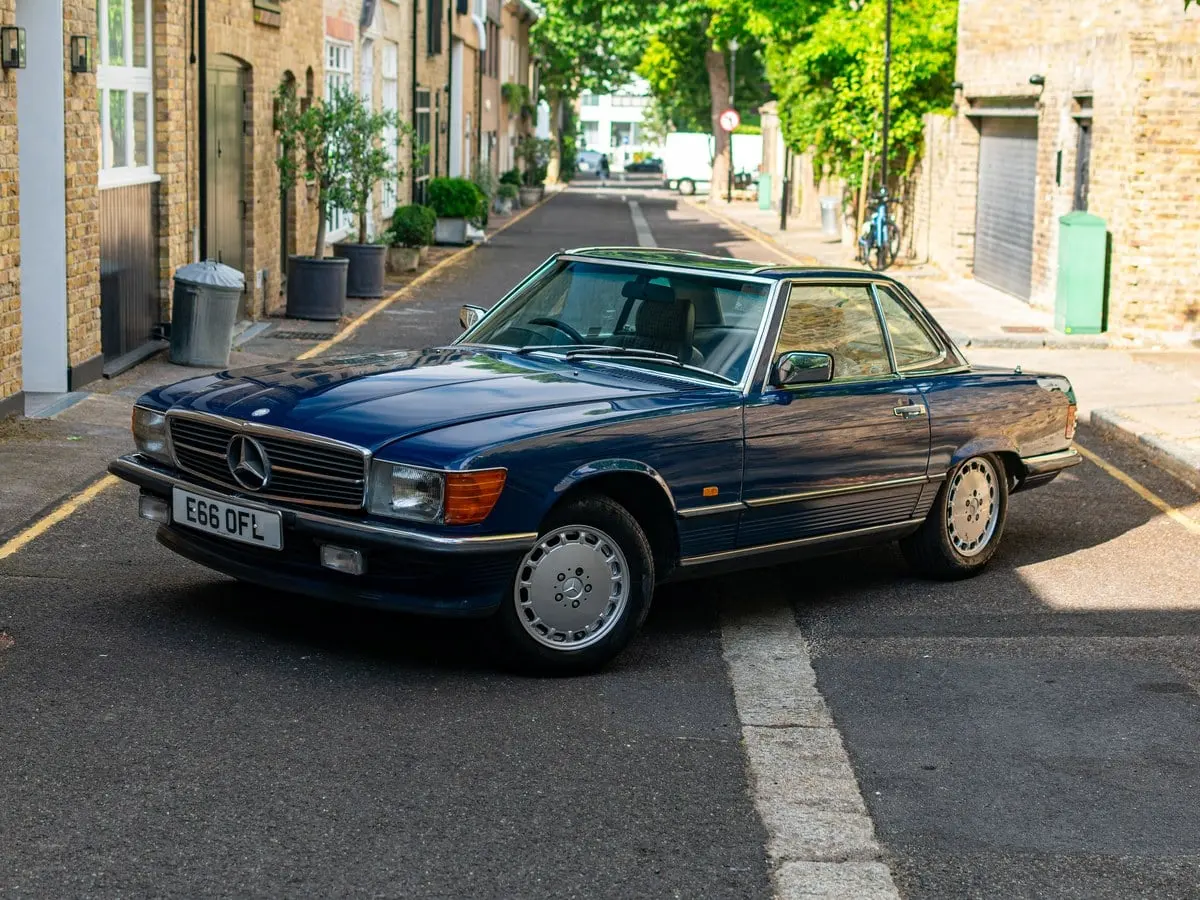
Mercedes R107 SL buying guide: where these cars rust
Where the R107 SL corrodes, which engine to choose and what paperwork to ask for. A UK buyer's inspection guide to the 1971 to 1989 Mercedes SL.
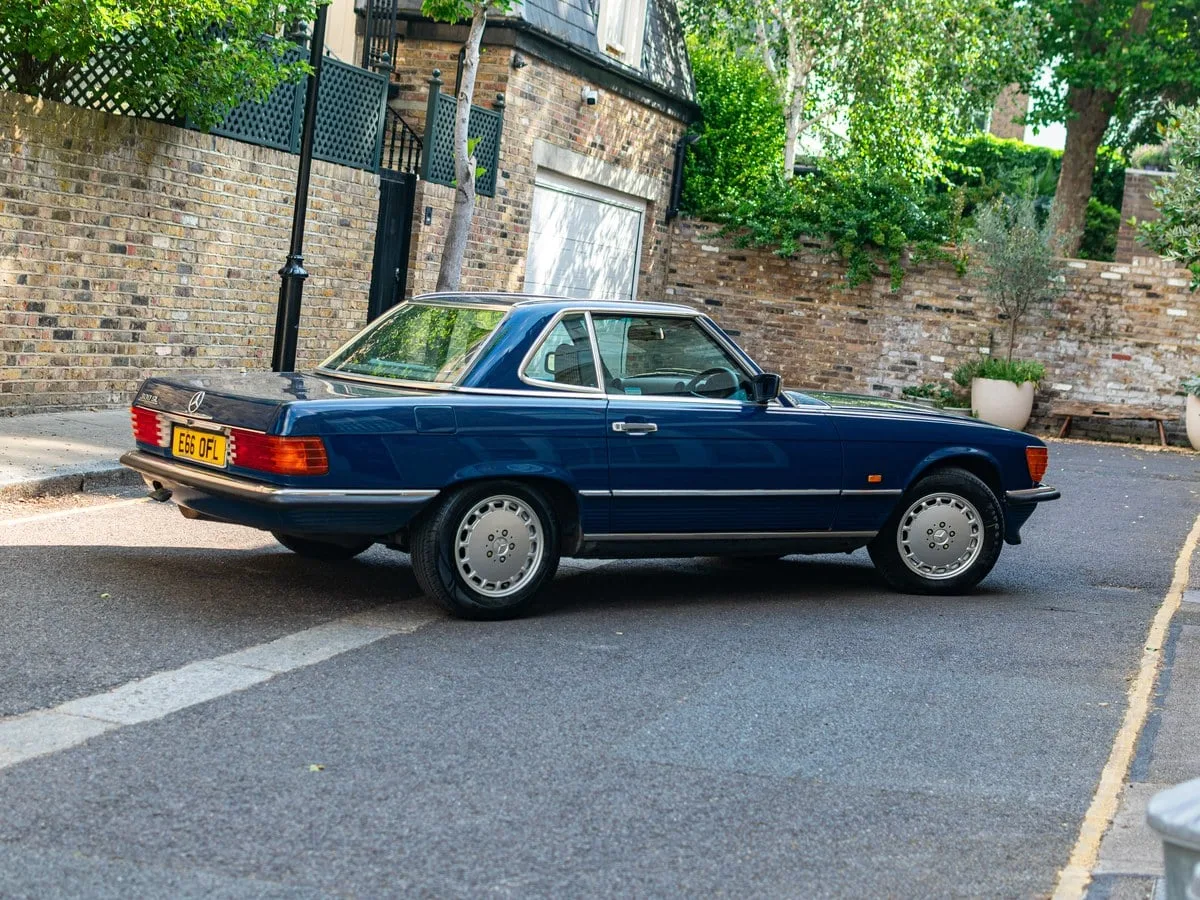
The R107 SL was built from 1971 to 1989, one of the longest production runs Mercedes has ever given a model. That means an enormous spread in condition, specification and price, and it means the car you are looking at could be anything from an early carburettor model to a car built at the very end of the eighties. Knowing which you are looking at, and where these cars suffer, does most of the work.
Where the R107 rusts
Bodywork is where the money is on an R107. The mechanicals are robust and well understood. Corrosion is what turns a cheap car into an expensive one, and the places it starts are consistent enough to make an inspection methodical.
Look at, in this order:
- Jacking points and sills. Structural, frequently patched badly, and expensive to repair properly. Press them. Look for filler and for welds that do not match the factory seams.
- Floorpans, particularly under the carpets and in the footwells.
- The spare wheel well and boot floor. Water finds its way in and sits there.
- Front and rear wheel arches, inner and outer.
- The battery tray area, where spilled acid does its own damage.
- Around the windscreen and rear screen, where trapped moisture under the seals starts corrosion you cannot see from outside.
A car that has been resprayed is not automatically suspect, but it does mean you need to establish what was done underneath the paint rather than take the finish at face value.
Which engine: 300 SL or V8
The 300 SL, built from 1985, uses the M103 three-litre straight-six. It is the later evolution of the six and it is the one most people should want: smoother than the engine it replaced, more economical than the V8s, and easier to live with. The V8 cars are faster and command more money, but very few R107s are driven in a way that makes the difference matter.
Whichever engine, look for evidence of regular servicing rather than a recent flurry of work before sale. A thick file that runs back decades tells you more than a fresh oil change.
Hard top and soft top
Most R107s were supplied with a removable hard top as well as the folding soft top. A car with both is more valuable and far more usable, because the hard top turns it into a genuine winter car.
Two practical points. A hard top is heavy and needs two people and somewhere to store it. And check the soft top mechanism works through its full travel, along with the condition of the fabric and the rear screen.
Paperwork and the Mercedes datacard
Ask for the Mercedes-Benz datacard. It lists exactly how the car left the factory, down to the options, and it is the quickest way to establish whether what you are looking at is what was built.
Beyond that: the V5C, the service book, historic MOT certificates, and invoices for work carried out. Continuous history matters more than a single impressive restoration receipt, because it shows the car has been cared for rather than rescued.
What we would do first
Get it on a ramp. Everything above can be assessed properly in twenty minutes underneath the car, and almost none of it can be assessed reliably from photographs or a walk around a car park. If a seller will not allow an inspection, that is your answer.
Common questions
Is the six-cylinder 300 SL worth having over a V8?
For most owners, yes. The 300 SL uses the later M103 straight-six, which is smoother than the earlier six, cheaper to run than the V8s and simpler to maintain. The V8 cars are quicker, but the six suits the way an R107 is usually driven.
Do I need both a hard top and a soft top?
A car with both is worth more and is far more usable, since the hard top makes it a practical winter car. Buying a hard top separately later is expensive, and you need somewhere to store it.
How much rust is acceptable?
Surface corrosion on a car of this age is normal. What matters is location. Structural areas such as sills, jacking points and floors are the ones to inspect closely, because putting them right properly is the expensive work.